Pre-Optimization Phase
- Primary keyword analysis
- Analyzing top-ranking pages for the same search
- Defining user intent accurately
- Evaluating current page performance
We offer On-Page SEO services to optimize your website for search engines. By refining headers, restructuring content, organizing internal links, and enhancing keyword targeting, we help improve your rankings and drive sustainable organic traffic growth.
Technical SEO
On-Page SEO
On-Page Basic Package
175$
Includes
On-Page Advanced Package
250$
Includes
Comprehensive On-Page Package
300$
Includes

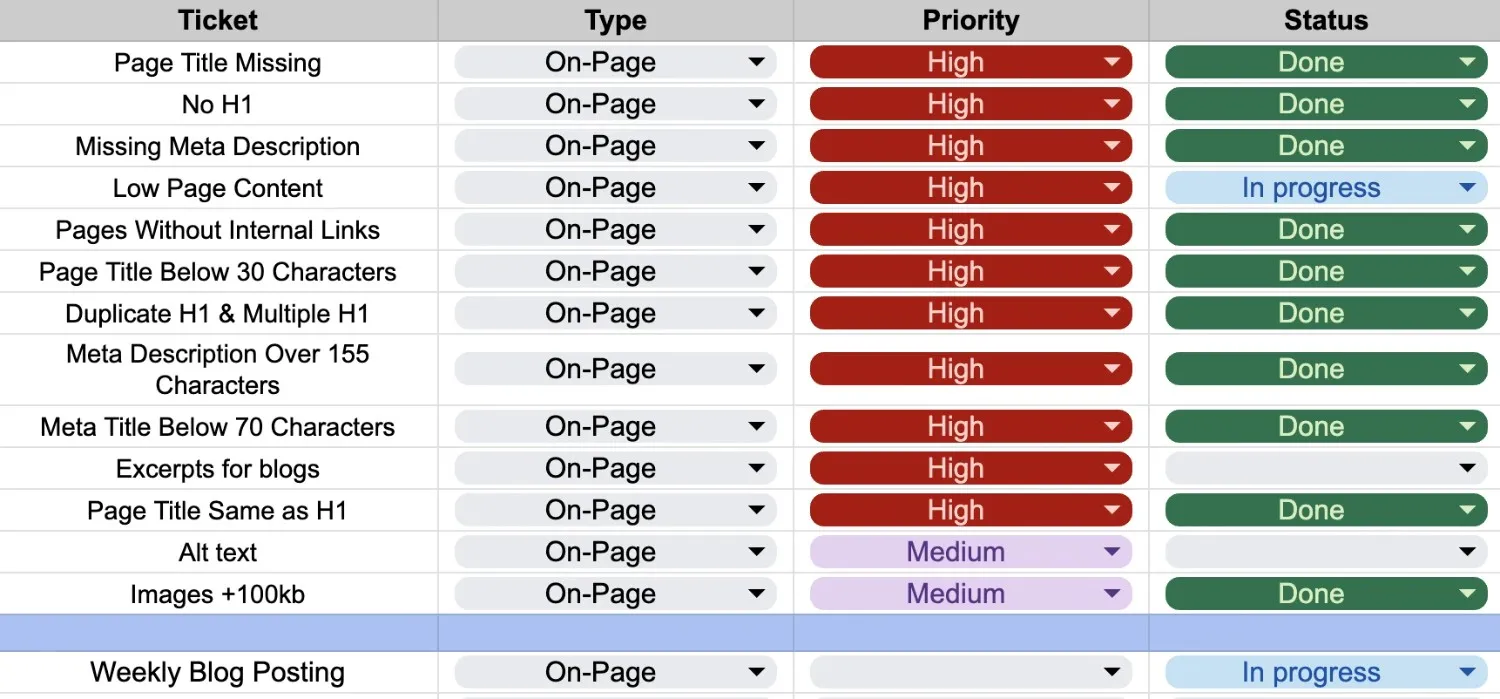
We analyze your website pages, identify weaknesses in titles, content, and keywords, and reorganize the internal structure. Then, we provide a clear plan to enhance page efficiency and increase your chances of ranking at the top of search results.

How can I learn SEO principles from scratch?
If you are looking to learn SEO basics, understand how search engines work, and how to optimize content to rank on Google, you can download “The Profitable Alphabet.” This practical guide explains SEO fundamentals, keyword analysis, and step-by-step SEO-friendly content writing.
It is the process of optimizing page content and elements like titles, keywords, Meta Titles, internal links, and paragraph structure to improve search rankings and user experience.
By optimizing On-Page elements: choosing the right keywords, improving titles, writing content that matches search intent, and organizing internal links. Good On-Page SEO allows a page to compete even without strong backlinks.
Yes. Optimizing the Title Tag and H1 to include the primary keyword naturally can improve Click-Through Rate (CTR) and boost rankings.
On-Page focuses on content and elements visible to users, while Technical SEO deals with the backend structure like indexing and speed.
If the page isn’t ranking, receives low traffic, or has a low CTR despite appearing in results, it likely needs improvements in titles, content, and keyword targeting.
No. Keyword stuffing can hurt your rankings. It is better to distribute keywords naturally and focus on search intent and answer quality.
They help search engines understand site structure, distribute “link juice,” and improve user experience by increasing time spent on site.
Length isn’t the main factor; comprehensive coverage that matches search intent is. Thorough content usually performs better.
The H1 should contain the main keyword, while H2 and H3 are used to organize the topic into clear sections for Google and the user.
It doesn’t affect rankings directly, but it impacts CTR, which can indirectly improve page performance
Based on search volume, competition, and user intent. Focusing on words directly related to the service/product increases ranking and conversion chances.
Yes. Updating current content often yields faster results than creating a new page, especially if the old page is already indexed.
Usually due to an unappealing Title, a weak Meta Description, or unclear value. Optimizing these elements increases CTR.
Yes. It attracts targeted traffic that matches search intent, increasing the likelihood of converting visitors into customers.
Some changes like titles can show results within weeks, but stabilizing rankings takes time depending on competition and site authority.
An Arabic Consultancy Specialized in Content Writing & SEO
Wordian is Proudly 100% Remote.
Quick Links
Wordian ©2026 - All Rights Reserved
Designed, Developed & Maintained by Omar Reffa